Settlement Inspection
How a foundation gets checked for active differential settlement, and what a single-visit look can and cannot tell you.
San Diego County foundation settlement diagnostics — why a foundation settles, how to tell normal settling from a structural problem, and how independent local providers compare repair methods for your specific soil and settlement pattern.
Settlement RepairRequest ServiceSome settlement questions are clear on inspection. Others genuinely are not — a crack that might be widening, a floor that might be sloping more than it used to. Monitoring answers "is this getting worse" with a measurement instead of a guess.
Ask about monitoring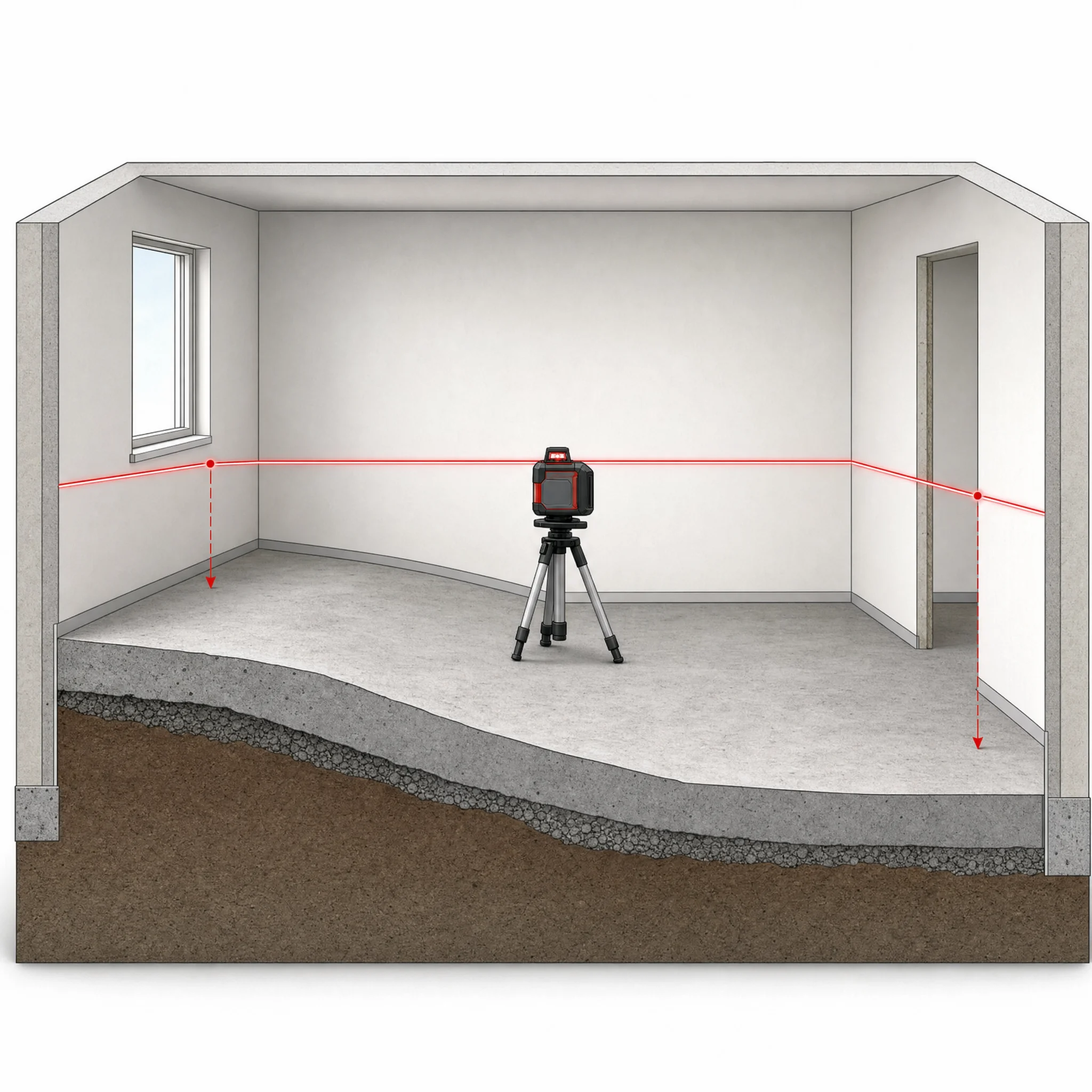
Mounted across a crack, it shows any change in width between readings — the standard way to answer "is this crack still moving."
A repeated floor-level measurement over time shows whether a sloped or uneven area is stable or continuing to change.
It varies by situation — weeks for something that needs a faster answer, up to a few months for a slower-moving question. The right period depends on how the property has behaved so far and how urgently a decision is needed.
A stable reading over the monitoring period is real evidence the movement has settled — it does not necessarily mean nothing should ever be watched again, but it removes the urgency of an immediate structural repair.
That is the point where confirming a cause and involving a licensed structural or geotechnical engineer becomes the right next step, ahead of choosing a repair method — see settlement repair for that arc.
If a single look has not given a clear answer, describe what has been observed so far and we can help you understand whether monitoring is the right next step.
Request Service