Differential settlement repair in San Diego: from symptom to confirmed fix

Differential settlement is one part of a foundation moving down more than the rest of it — the specific pattern behind a stair-step crack, an uneven floor, or a door that suddenly will not close. This page walks through how it actually gets confirmed, watched if a single look is not conclusive, and addressed once confirmed.

Describe what you're seeing
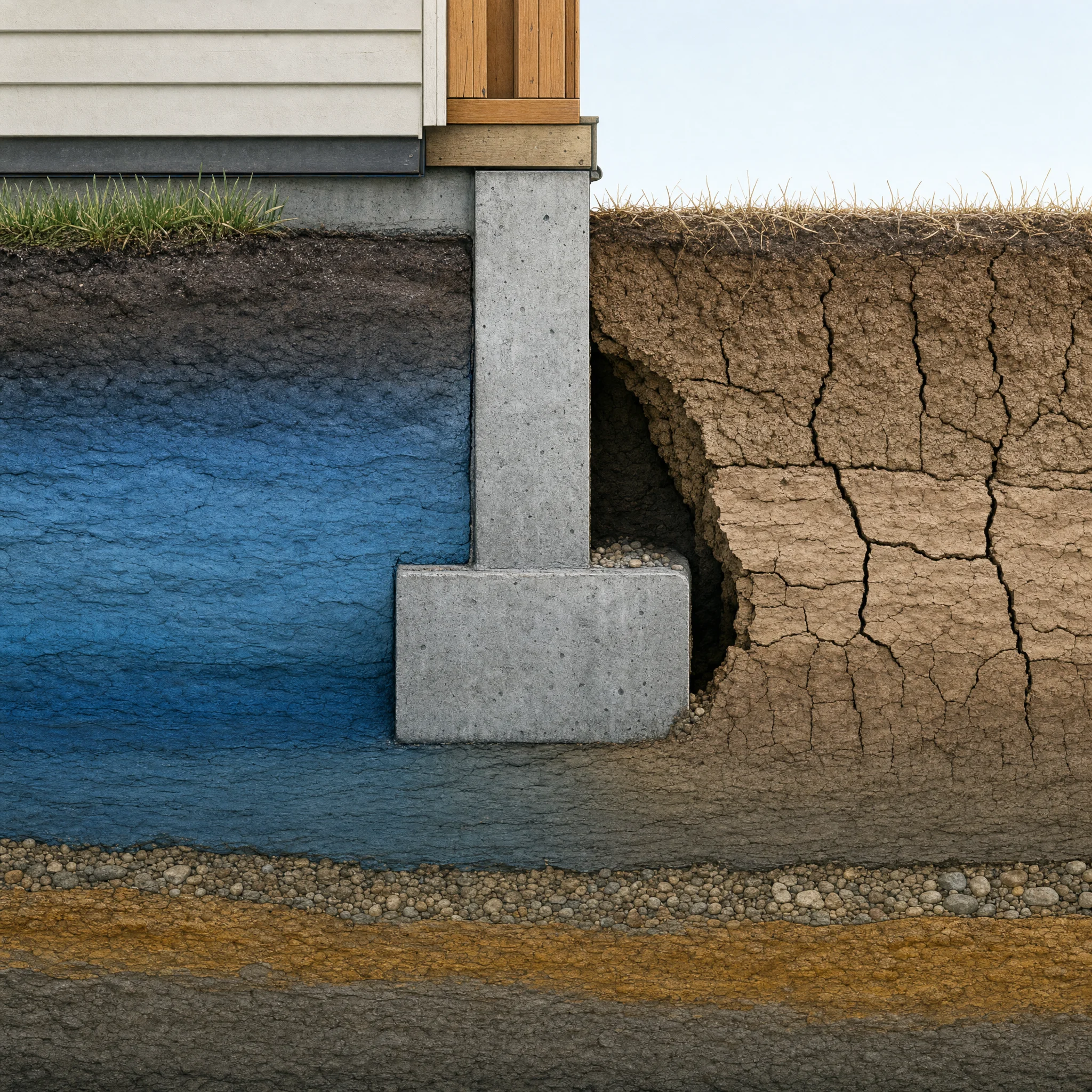
Cross-section illustration of soil layers beneath a house foundation footing, showing an expansive clay layer that has shrunk away from the footing on one side, leaving a gap.

What differential settlement usually looks like

  • A stair-step crack through masonry joints in a block or brick foundation wallOne of the more specific, reliable patterns worth a closer look — see normal settling vs. a structural problem for how it differs from a hairline cosmetic crack.
  • A door or window that used to close easily and now sticks or will not latchThe framing around it has shifted out of square. Whether that is a one-time event or ongoing movement is exactly what settlement inspection determines.
  • A floor with a visible slope, or a spot where a ball would rollOne section of the foundation has moved relative to the rest — the clearest visible sign of differential settlement.
  • A gap opening between a wall and the ceiling, or along a baseboardOne part of the structure pulling away from another, consistent with uneven movement below.

How differential settlement actually gets confirmed

  1. Document what is actually being observedWhere the symptom is, how large it is, and whether it has changed. A stair-step crack that keeps widening reads differently from one that has been stable for a year.
  2. Take a baseline measurementA crack width gauge or an elevation survey establishes a starting point. Without one, "has this gotten worse" is a guess rather than a measurement.
  3. Monitor if the picture is not conclusive on one visitSome settlement is genuinely ambiguous from a single look. Settlement monitoring covers how that gets watched over weeks or months rather than guessed at.
  4. Confirm the likely causeSoil moisture cycling, poor original compaction, drainage directing water at the foundation, nearby tree roots, or a hidden plumbing leak are the well-documented general categories — see settlement monitoring signatures by cause for how each one works and why more than one can apply to the same property at once.
  5. Bring in a licensed structural or geotechnical engineer for anything confirmed as activeOnce movement is confirmed as ongoing rather than settled and stable, an independent engineering opinion on the specific soil and structure is the right next step before a repair method is chosen.

The general repair approaches, and where each is covered

Steel push piers or helical piers

Fits when: Confirmed structural settlement where the foundation needs to be transferred to more stable, load-bearing soil or bedrock.

Trade-off: A more invasive, typically more permanent structural method — see steel piers vs. foam injection for how the two pier types and the alternative method actually compare.

Polyurethane foam injection

Fits when: Certain slab and void-fill situations where lifting and stabilizing without full excavation fits the confirmed cause.

Trade-off: Generally less invasive and faster, but not a fit for every settlement pattern — see the comparison for the specific conditions each method assumes.

A combined, multi-stage approach

Fits when: Settlement is not always one problem with one cause — a property can need footing stabilization in one section and a different approach elsewhere on the same foundation.

Trade-off: More coordination, but addresses what an assessment actually finds rather than forcing one method across the whole structure.
What generally happens, once a repair method is confirmed

  1. Site access and stagingLandscaping, walkways, or interior flooring near the affected section may need to be moved or protected before work begins.
  2. Excavation or interior accessDepending on the method, work happens either along the exterior footing or from inside, at the affected section.
  3. Installation of the confirmed methodPiers driven to load-bearing strata, or foam injected beneath the affected slab — the confirmed method for the confirmed cause.
  4. VerificationA post-work measurement against the original baseline confirms the movement has been addressed as intended.
  5. RestorationLandscaping, walkways, and interior finishes are restored around the completed work.

What moves a settlement repair estimate

Access to the affected section

Excavation along a tight side yard or under an occupied interior costs differently than open exterior access.

Confirmed repair method

Piering and foam injection are different scopes of work with different equipment and time requirements.

How much of the foundation is affected

A single corner is a different scope from settlement affecting a longer run of footing.

Soil and structure specifics

How deep piers need to be driven to reach stable strata, or how much void space needs filling, varies by property.

Restoration scope

What has to be moved, protected, or restored around the work — landscaping, flooring, walkways — adds to the total.

Where this is covered

Across San Diego County — see service areas for the specific pages and what genuinely differs by location for settlement questions.

  • San Diego
  • Chula Vista
  • El Cajon
  • La Mesa

Questions people ask

What is differential settlement, specifically?

It is uneven settlement — one part of a foundation moving down more than another part, rather than the whole structure settling evenly. Even settlement across a whole foundation is normal and rarely a problem; differential settlement is the pattern worth a closer look.

How is settlement actually confirmed, versus guessed at?

A baseline measurement — a crack gauge or an elevation survey — establishes a starting point, and either a single confirmed observation or a period of monitoring establishes whether movement is ongoing. See settlement inspection and settlement monitoring for how each works.

Can settlement have more than one cause on the same property?

Yes. Soil moisture cycling, drainage, tree roots, and original compaction can compound each other, and a property can genuinely need more than one repair approach in different sections. See settlement monitoring signatures by cause.

Which repair method is used — piers or foam injection?

It depends on the confirmed cause, the soil, and what part of the structure is affected. See steel piers vs. foam injection for how the two work and when each fits.

Can I get a price without an inspection?

No, and treat any number offered sight-unseen with real skepticism. Access, method, extent, and soil conditions all depend on an actual look at the property.

Describe what your house is doing

What you noticed, where, and roughly when it started is enough to start with. We will help you work out what looks like next.

Request Service